Dental Implant vs Denture: Which Is Right for Multiple Missing Teeth?
For patients missing multiple teeth, dental implants offer fixed, natural-feeling replacement teeth that preserve jawbone, while traditional dentures are removable, lower-cost, and non-surgical but accelerate bone loss over time. Implant-supported dentures combine both, snapping onto 2 to 6 implants for stability. The right choice depends on bone health, budget, and lifestyle.
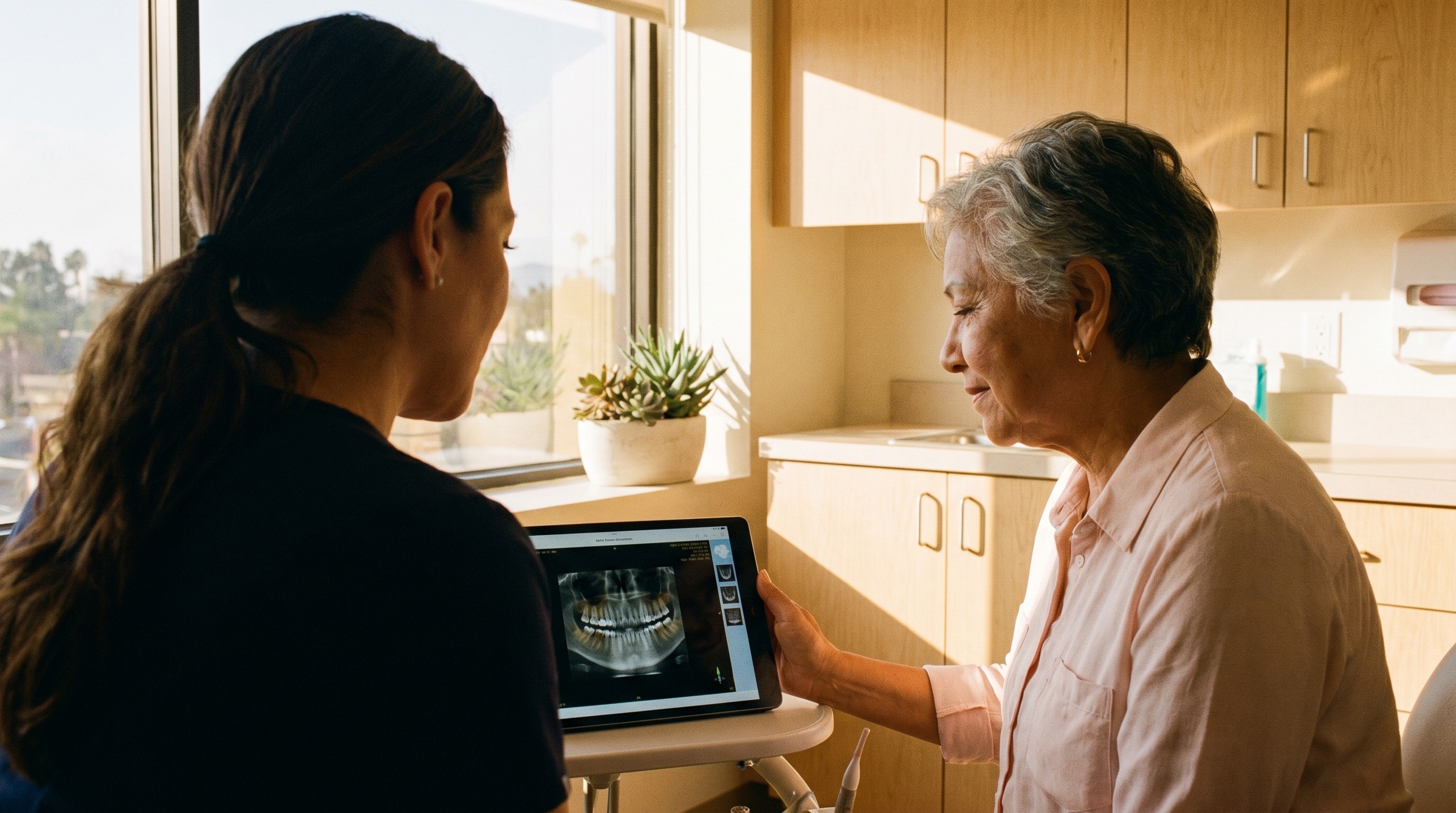
For patients missing multiple teeth, dental implants offer fixed, natural-feeling replacement teeth that preserve jawbone, while traditional dentures are removable, lower-cost, and non-surgical but accelerate bone loss over time. Implant-supported dentures combine both, snapping onto 2 to 6 implants for stability. The right choice depends on bone health, budget, and lifestyle.
At La Mirada One Dental, we have this conversation often. A grandmother from Cerritos comes in with a partial denture that no longer fits. A self-employed dad from Whittier has lost three back molars and wants to know what makes sense long term. The decision is rarely about teeth alone. It is about chewing dinner with the family, smiling in photos, and not spending the next twenty years adjusting and readjusting.
Here is how we walk patients through it.
What's the real difference between implants and dentures?
Dental implants are small titanium posts placed into the jawbone. According to the ADA, titanium is biocompatible and fuses with bone through a process called osseointegration. Once that happens, a crown, bridge, or full set of teeth attaches on top. The result is fixed. It does not come out.
Dentures are different. They are removable prosthetics that rest on the gums, sometimes clipping onto remaining natural teeth. You take them out at night. You put them in a cup.
There is a third option that surprises a lot of patients. Implant-supported dentures snap onto 2 to 6 implants. They are removable for cleaning but lock into place during the day. Best of both worlds for many people.
How do they compare for chewing and daily life?
This is where the daily difference shows up. Conventional dentures typically restore around 20 to 25 percent of natural chewing force, based on data published in the prosthetic dentistry literature. Implants restore close to natural levels because the force travels through bone, not soft tissue.
What does that mean at the dinner table? Steak, crusty bread, raw apples, corn on the cob. Patients with traditional dentures often avoid them. Patients with implants usually do not.
Speech is another factor. Upper dentures cover the palate, which can affect certain sounds at first. Implants leave the palate free. Cleaning routines also split: dentures soak overnight, implants get brushed and flossed like real teeth.
What happens to your jawbone with each option?
This is the part most patients have never heard before. When a tooth is lost, the bone underneath starts to shrink. The body reabsorbs it because nothing is using it anymore. According to the NIDCR and peer-reviewed implant literature, dental implants transmit chewing forces into the jaw and help preserve that bone. Conventional dentures do not.
Over years, denture wearers can see noticeable facial changes. The lower face shortens. Lips can sink inward. The denture itself stops fitting because the ridge it sits on has shrunk.
That is why dentures need relines. The mouth changes underneath them.
How do costs and longevity compare?
Upfront, dentures cost less. That is the honest truth, and we say it plainly. A full set of conventional dentures will almost always come in below the cost of multiple implants.
Lifetime cost is a different math. Dentures typically need relining or replacement every 5 to 10 years, according to ADA patient resources, because the underlying ridge keeps changing. Implants, in healthy patients, have long-term survival rates above 90 percent at 10 years, based on Cochrane Reviews and peer-reviewed implant studies. Many last decades.
Add up two or three denture replacements, a handful of relines, and adhesives over twenty years. Then compare. The gap narrows considerably.
Who is each option best suited for?
There is no universal answer. We see three rough categories at our practice off Imperial Highway:
Strong implant candidates: adequate jawbone, generally healthy, want fixed teeth that feel like their own, willing to invest upfront for long-term value.
Traditional denture candidates: significant bone loss already present, prefer to avoid surgery, working within a tighter budget, comfortable with a removable appliance.
Implant-supported denture candidates: the middle ground. Patients who want dentures that do not slip, do not need adhesives, and still preserve some bone. Common choice for La Mirada and Norwalk patients who feel stuck between the two extremes.
Health matters too. Uncontrolled diabetes, heavy smoking, and certain medications can affect implant healing. We talk through all of it during the consultation.
What does the process look like at La Mirada One Dental?
Every plan starts with a conversation and a CBCT 3D scan. The scan tells us exactly how much bone is there, where the nerves run, and what is realistic. No guessing.
From there, Dr. Park builds a plan around three things: your bone, your overall health, and your budget. Sometimes that means a full set of implants. Sometimes it means an implant-supported lower denture paired with a traditional upper. Sometimes it means starting with a well-made conventional denture today and revisiting implants later.
For patients without dental insurance, our in-house membership plan often makes a meaningful difference. We also work with CareCredit and other third-party financing. We will lay out the numbers before you commit to anything. Every single time.
Multi-generational families across Southeast LA County. That is who we serve. From Cerritos to Buena Park, Whittier to Santa Fe Springs, patients drive in along the I-5 corridor for care that does not rush them through a decision this big.
Frequently Asked Questions
Can I switch from dentures to implants later?
Often yes, though it depends on how much bone remains. Long-term denture wearers sometimes need bone grafting first because of resorption. A CBCT scan tells us what is possible. Many of our La Mirada patients start with dentures and transition to implant-supported options once they are ready.
Do implant-supported dentures still come out for cleaning?
Yes. The removable type, sometimes called overdentures, snaps onto the implants during the day and comes out at night for cleaning. There are also fixed full-arch options that only your dentist removes. We will explain the difference during your consultation so you can pick what fits your lifestyle.
How many implants are needed to support a full arch?
Implant-supported overdentures often use 2 to 4 implants in the lower arch and 4 to 6 in the upper arch, according to AAOMS and prosthodontic literature. The upper jaw is softer and usually needs more anchors. Your CBCT scan and bite plan determine the exact number for your case.
Will insurance cover any part of implants or dentures?
Many PPO plans cover a portion of dentures and sometimes a portion of implant crowns, though coverage for the implant post itself varies widely. We accept most major PPO plans, do not accept Medi-Cal, and offer our in-house membership plan plus CareCredit for patients who need flexible payment options.
Is the implant surgery painful?
Most patients describe the procedure itself as easier than expected. We use local anesthesia and sedation options when needed. Soreness for a few days afterward is normal and usually managed with over-the-counter pain relievers. The bone healing happens quietly in the background over the following months.
Still weighing your options? We are happy to talk it through with no pressure. Call La Mirada One Dental at (562) 777-1234 or stop by 14930 E Imperial Hwy, Suite D. We see patients Tuesday through Saturday, including weekend appointments that work for busy families.