Why is my tooth throbbing? What pulsing pain really means
A throbbing tooth usually means the inner pulp is inflamed or infected. Because the nerve sits in a sealed chamber, swelling creates pressure that pulses with your heartbeat. Common causes include deep decay, a cracked tooth, or an abscess. Throbbing pain rarely resolves on its own and typically needs prompt dental evaluation.
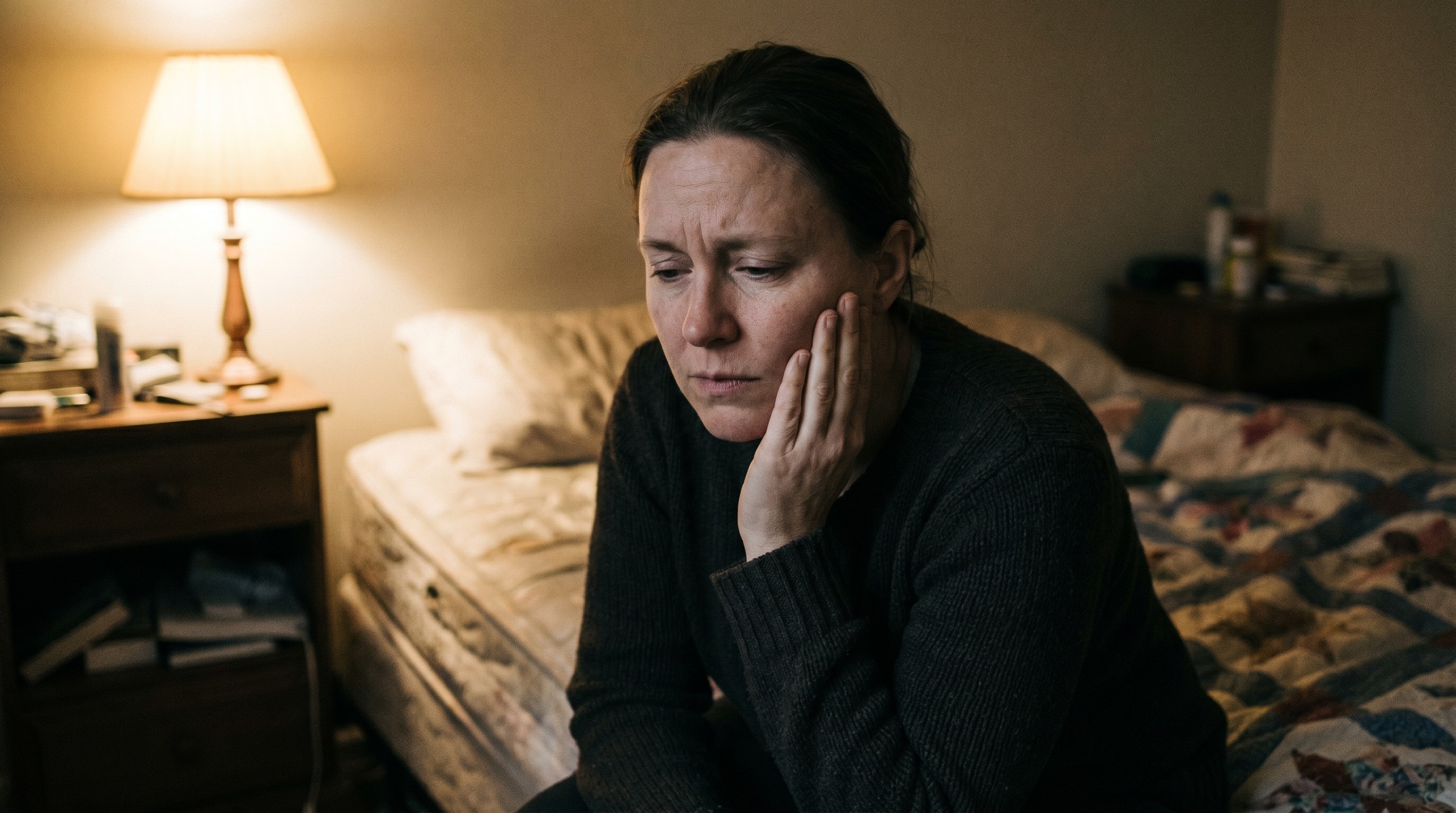
A throbbing tooth usually means the inner pulp is inflamed or infected. Because the nerve sits in a sealed chamber, swelling creates pressure that pulses with your heartbeat. Common causes include deep decay, a cracked tooth, or an abscess. Throbbing pain rarely resolves on its own and typically needs prompt dental evaluation.
At La Mirada One Dental, we hear this question almost every week. A patient calls in, voice tight, describing a tooth that beats like a tiny drum every time they bend over or lie down. Sometimes it started after a popcorn kernel. Sometimes it crept in over months. Either way, the throb is your body sending up a flare.
Here's what that signal actually means, and what to do next.
What does a throbbing tooth actually mean?
A throb is pressure. Inside every tooth is a small chamber called the pulp, filled with nerves and blood vessels. When that pulp becomes inflamed, blood rushes in to fight the problem. But the chamber is sealed by hard enamel and dentin. There's nowhere for the swelling to go.
So you feel each heartbeat as a pulse inside the tooth. That rhythm is the giveaway. Surface sensitivity (the quick zap from ice cream) usually fades in seconds. A throb that matches your pulse means the nerve itself is involved.
That distinction matters. It changes how urgent the situation is.
The most common causes of pulsing tooth pain
Five usual suspects show up again and again in our operatory:
Deep cavity reaching the pulp. Decay that punches through the enamel and dentin eventually touches the nerve. The American Association of Endodontists notes that once the pulp is inflamed beyond healing (called irreversible pulpitis), root canal therapy or extraction is typically required.
Cracked tooth. A hairline fracture, sometimes invisible on X-ray, lets bacteria seep down to the nerve. Often the throb shows up after biting something hard.
Dental abscess. A pocket of pus forms at the root tip or along the gum. Per Mayo Clinic and ADA guidance, an untreated abscess can spread infection into the jaw, neck, or bloodstream.
Recent dental work. A new filling or crown can leave a tooth tender for a few days. If it's still throbbing after a week, call us.
Sinus pressure. Upper molars share nerve space with the sinuses. A cold or allergy flare can mimic a toothache.
The cause changes the fix. That's why a real exam matters.
When throbbing tooth pain is a true emergency
Most throbbing teeth need same-week care. Some need same-hour care. Watch for these red flags:
Visible swelling in your face, jaw, or neck
Fever, chills, or feeling generally unwell
Trouble swallowing or breathing (go to the ER immediately, not a dental office)
Pain that wakes you up at night or shrugs off ibuprofen
A bad taste, salty drainage, or visible pus
According to CDC and ADA emergency guidance, facial swelling with tooth pain that affects breathing or swallowing is a medical emergency. Don't wait. Head to the nearest emergency room. Once stabilized, we can take over the dental side.
A few months ago, a self-employed contractor from the Cerritos side of Imperial Highway called us on a Saturday morning. He'd been chewing through a throb for three days and woke up with his cheek swollen against his ear. We saw him within the hour, drained the abscess, and started antibiotics. He kept his tooth. Three more days and the story might have ended differently.
What you can do tonight to ease the pain
If your throb hits at 9 p.m. and the office is closed, these steps buy you time until morning:
Saltwater rinse. Half a teaspoon of salt in warm water, swished gently. It calms tissue and lowers bacteria.
Cold compress on the outside of the cheek. Twenty minutes on, twenty off. Skip the heating pad. ADA guidance notes heat can encourage infection to spread.
OTC ibuprofen, if your doctor allows it. It works on both pain and inflammation, which is exactly the combination at play.
Elevate your head. Lying flat increases blood flow to the head, which intensifies the throb. Per AAE patient education, propping up on an extra pillow can take the edge off.
Avoid chewing on that side. Skip very hot or very cold foods and anything sugary.
These are bridges. Not fixes. The throb will keep coming back until the source is treated.
What treatment usually looks like at La Mirada One Dental
When you walk into our office at 14930 E Imperial Hwy, here's what to expect:
First, a free emergency dental exam. Dr. Park, DDS will look, tap, and test the tooth to find the source of pain. We use digital X-rays, and when the situation calls for it, CBCT 3D imaging to see down to the root tip and surrounding bone.
From there, treatment depends on the cause:
Root canal therapy if the pulp is inflamed but the tooth is structurally sound. We clean out the nerve, seal the chamber, and usually cap it with a crown.
Antibiotics if there's active infection. Important note: the ADA's position on antibiotic stewardship is clear that antibiotics alone do not fix pulpal inflammation. They control infection while we plan the real repair.
Extraction if the tooth is cracked below the gum line or too damaged to save. We'll talk about replacement options, including implants, at a follow-up visit.
We hold same-day appointment slots open for emergencies. Saturday hours from 8 a.m. to 1 p.m. help patients who can't slip away during the workweek, including Biola University students juggling exams and families driving in from Norwalk and Whittier along Beach Boulevard.
A throb that matches your pulse means the nerve itself is involved. That changes everything about how soon you need to act.
Frequently Asked Questions
Can a throbbing tooth heal on its own?
Almost never. Surface sensitivity from a thin spot of enamel can settle down, but a true throb means the inner pulp is inflamed. Once the nerve is involved past a certain point (irreversible pulpitis), the tooth cannot heal itself. Waiting usually means more pain, infection risk, and a higher chance of losing the tooth.
Is throbbing tooth pain always an abscess?
No, but abscess is one of the most serious possibilities. Throbbing can also come from deep decay, a cracked tooth, recent dental work, or sinus pressure pushing on upper molar roots. The only way to know which is which is an exam with X-rays. Treating an abscess as a simple cavity (or vice versa) wastes time you don't have.
Why does my tooth throb more when I lie down?
Lying flat increases blood flow to the head, which raises pressure inside the inflamed pulp chamber. The tooth has no room to expand, so the extra pressure shows up as more intense throbbing. Sleeping with your head propped on an extra pillow can ease the pulse enough to get through the night.
How fast do I need to see a dentist for pulsing pain?
Within 24 to 48 hours for most cases. Same day if there's swelling, fever, or pain that won't quiet with ibuprofen. Immediately to the ER if you have trouble breathing or swallowing. The longer an infected tooth waits, the more likely it spreads beyond the tooth itself.
Will antibiotics alone fix a throbbing tooth?
No. Antibiotics can knock down an active infection and reduce swelling, but they do not address the source of pulpal inflammation. The ADA is clear on this. You'll still need a root canal, extraction, or other definitive dental treatment to actually resolve the problem and stop the throb from returning.
Don't ride out the throb
Pulsing tooth pain is one of those signals your body sends with purpose. It rarely fades. It usually grows.
If your tooth has been throbbing for more than a day, or if any red flags showed up while you were reading this, call La Mirada One Dental at (562) 777-1234. We hold same-day emergency slots Tuesday through Saturday and offer a free emergency exam to find the source fast. Dr. Park speaks English and Korean, and our team takes care of patients across La Mirada, Cerritos, Norwalk, Whittier, and the Biola University community.
Sleep tonight. Not through the pain.