Why Do My Child's Permanent Teeth Look Yellow Compared to Baby Teeth?
Yes, it's normal. Permanent teeth almost always look yellower than baby teeth because their enamel is thicker and their underlying dentin, which has a natural yellow tone, shows through. Baby teeth have whiter, more opaque enamel. Once all the baby teeth are replaced, the contrast disappears and the smile evens out.
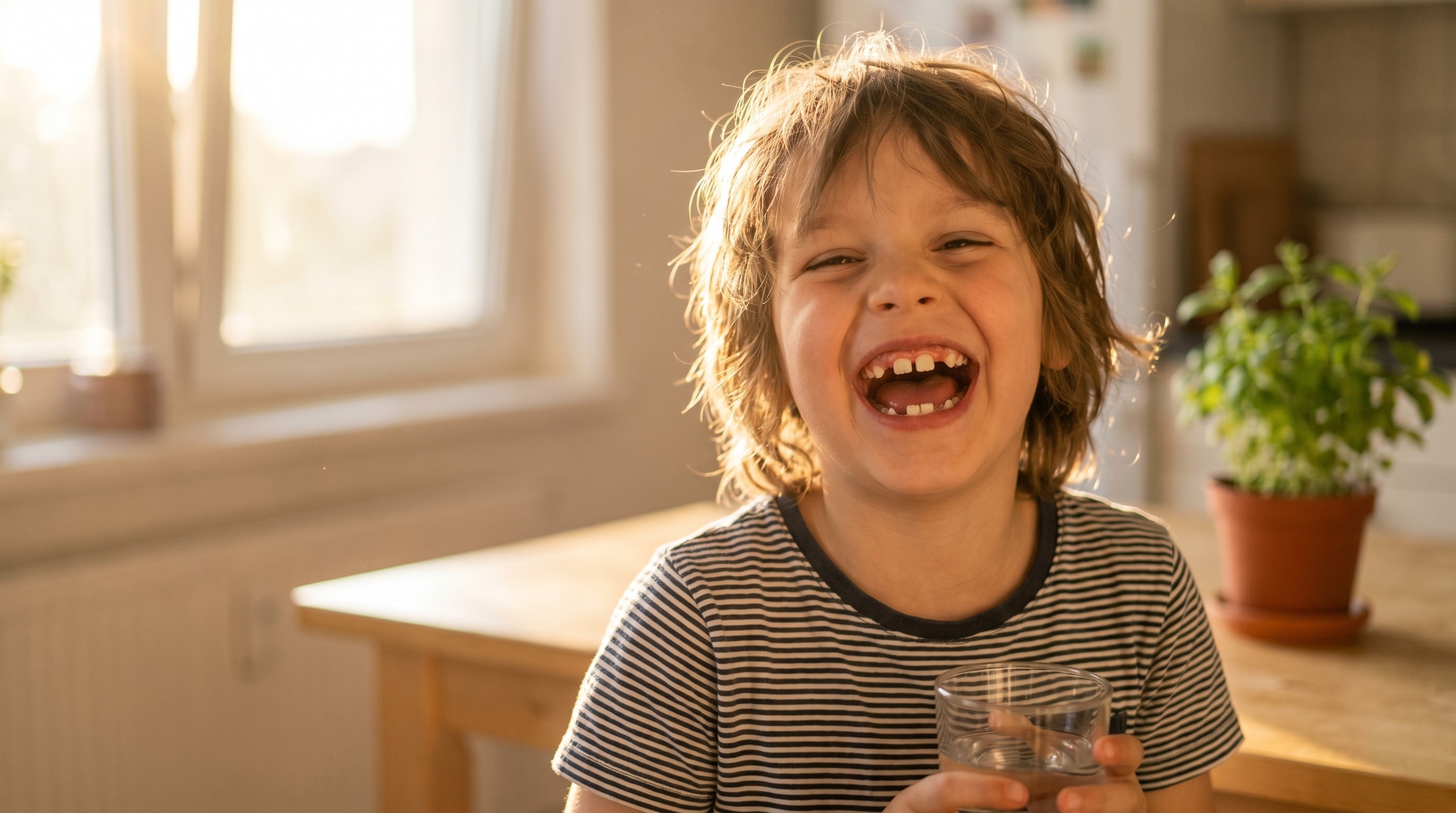
Yes, it's normal. Permanent teeth almost always look yellower than baby teeth because their enamel is thicker and their underlying dentin, which has a natural yellow tone, shows through. Baby teeth have whiter, more opaque enamel. Once all the baby teeth are replaced, the contrast disappears and the smile evens out.
We hear this question constantly at La Mirada One Dental. A parent will sit down at the consult and pull out a phone photo of their kindergartner mid-laugh, pointing at the two big new front teeth that suddenly look golden compared to the tiny white teeth on either side. The worry is always the same. Did I miss something? Is this a brushing problem?
Almost never. Let's walk through why.
Is it normal for new adult teeth to look yellow next to baby teeth?
Yes, and it is one of the most common visual changes parents notice during the mixed-dentition years. Most families spot it between ages 6 and 9, right as the lower front teeth and then the upper front teeth come in. According to the American Dental Association, permanent teeth typically begin erupting around age 6, starting with the lower central incisors and first molars.
When two teeth from different sets sit side by side, they will almost always look different in shade. That is not a hygiene failure. That is biology doing exactly what it should.
One mom from the Hillsborough neighborhood brought her 7-year-old in last spring after a school photo from a La Mirada USD elementary class came back. The new front teeth looked dramatically darker in the picture. Her son's teeth were perfectly healthy. The flash had just exaggerated a normal shade contrast.
Why are permanent teeth naturally darker than baby teeth?
It comes down to three structural differences.
Enamel thickness and opacity. Baby teeth have thinner but more opaque enamel that reflects light in a way that reads as bright white. The American Academy of Pediatric Dentistry notes that primary teeth have this whiter appearance specifically because of that enamel structure.
Dentin tone. Underneath enamel is dentin, which is naturally yellow. Permanent teeth have thicker enamel but also a lot more dentin, and that dentin shows through. The AAPD points to this as the main reason permanent teeth look more yellow than primary teeth.
Size. Permanent teeth are simply bigger. More surface area means more dentin color is visible.
Here is the encouraging part. The contrast fades. Once all the baby teeth have been replaced, usually by ages 11 to 13, the smile looks even again because all the teeth share the same structure.
When yellow could mean something else
Most of the time, the color contrast is normal. But there are a few patterns that deserve a closer look.
Uniform yellow with rough or chalky texture on a new tooth. This can point to enamel hypoplasia or molar incisor hypomineralization (MIH). MIH affects an estimated 10 to 14 percent of children worldwide and shows up as discolored, soft enamel on first permanent molars and incisors, according to the European Academy of Paediatric Dentistry.
Yellow-brown bands or pitting. The CDC notes that dental fluorosis appears as faint white lines or, in more severe cases, yellow-brown bands or pitting on enamel.
A single yellow or gray tooth after a fall or bump. If your child took a hit to the mouth months earlier (and any La Mirada parent of a bike-riding kid knows how often that happens), a darker tooth can mean the inner pulp was damaged.
Yellow buildup along the gumline that wipes off. That is plaque, not the tooth itself. It is a brushing issue and easy to fix.
If any of these patterns show up, that is the moment to call us.
What parents can do at home
For the routine, normal yellow contrast, the answer is reassuringly simple.
Stick with twice-daily brushing using a fluoride toothpaste, with a pea-sized amount for kids 3 and older.
Skip whitening toothpastes for children. The ADA does not recommend them for young kids because they can be abrasive and do not actually change the natural color of developing teeth.
Watch dark-staining drinks. Juice pouches, sports drinks, and sodas all stain over time.
Do not compare your child's smile to airbrushed adult smiles online. No 7-year-old's teeth are supposed to look like a Hollywood veneer.
Healthy teeth come in lots of shades. That is the whole trick.
When to bring your child to La Mirada One Dental
We see families from across La Mirada, Cerritos, Norwalk, and Whittier, many of whom drive in along Imperial Highway for routine checkups. Bring your child in if you notice any of the following on a new permanent tooth:
Spots, pitting, or rough texture
One tooth that looks distinctly darker than its neighbors
Yellow that does not change with consistent brushing
Any history of a fall or trauma followed by a color change
Even without those warning signs, the AAPD recommends a dental checkup every six months for most children. Routine visits are when we catch developmental enamel issues early, while they are still simple to treat. For our multi-generational families, we can often schedule siblings back to back and the parents on the same visit. One trip, one parking spot, done.
Frequently Asked Questions
At what age do permanent teeth come in for kids?
Most kids start losing baby teeth and getting permanent ones around age 6. The lower central incisors and first molars usually come in first, followed by the upper front teeth over the next year or two. The full transition to a complete permanent set typically wraps up between ages 11 and 13, not counting wisdom teeth.
Will my child's permanent teeth get whiter over time?
The teeth themselves will not lighten, but the visual contrast will fade as the remaining baby teeth fall out and are replaced. Once your child has a full set of permanent teeth, the smile will look uniform again. The shade you see at age 7 is roughly the natural shade of those teeth long term.
Can kids use whitening toothpaste safely?
We recommend against it for young children. Whitening toothpastes rely on abrasives or peroxide compounds that are not designed for developing teeth. A regular fluoride toothpaste does everything a child's smile needs. If you are worried about color, a dental visit gives you a real answer instead of a cosmetic guess.
Should I be worried if just one tooth looks yellow?
A single tooth that looks noticeably different from its neighbors is worth checking. It can mean the nerve was injured during a fall, an enamel defect during development, or something simpler like a stain. We can usually tell the difference in one short visit with a quick exam and a digital X-ray.
Does fluorosis cause yellow teeth in children?
It can. The CDC describes mild fluorosis as faint white lines, while more severe cases can appear as yellow-brown bands or surface pitting. Most fluorosis in the US is mild and cosmetic only. If you are concerned, we can look at the pattern of discoloration and tell you whether it is fluorosis, normal shade contrast, or something else.
If your child's new teeth have you second-guessing, bring them by. Dr. Park and our team at La Mirada One Dental are happy to take a quick look and give you a straight answer. Call us at (562) 777-1234 or stop by our office on Imperial Highway to book a visit.